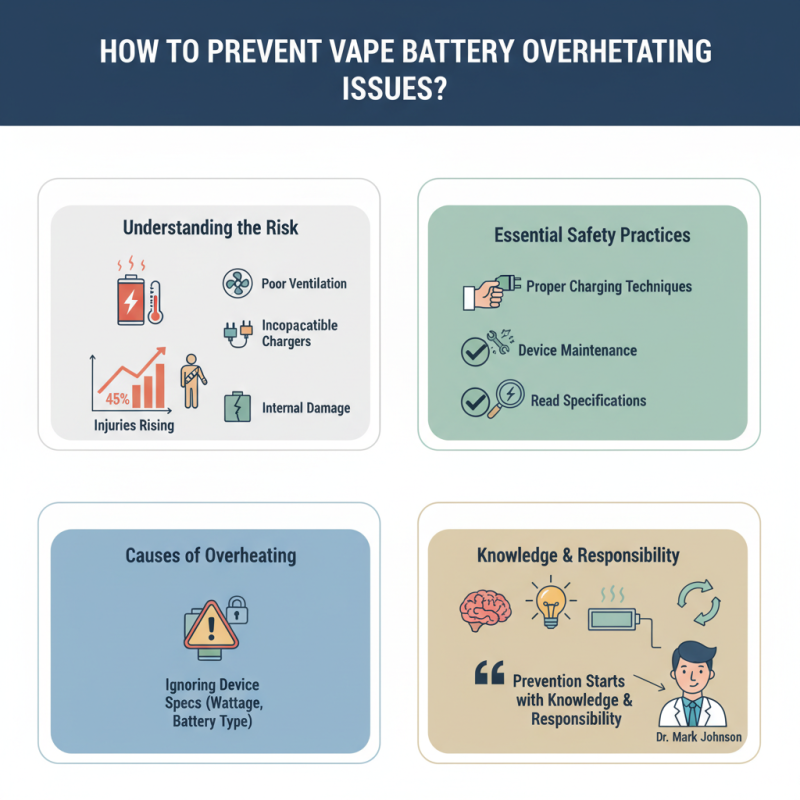
Overheating has become a prominent concern in the vaping industry, particularly regarding vape batteries. According to a report by the Consumer Product Safety Commission, incidents of battery-related injuries have risen by 45% over the past two years. These statistics accentuate the need for awareness around battery safety and management. Industry expert Dr. Mark Johnson emphasizes the importance of understanding "what causes a vape battery to overheat." As he noted, “Many users overlook the fundamental practices that prevent overheating, leading to careless handling.”
A battery can easily overheat due to factors like poor ventilation, using incompatible chargers, or internal damage. Users often disregard the specifications of their devices, such as wattage limits and battery type. This negligence can lead to dangerous consequences. It's essential for vapers to recognize that every component plays a critical role in overall safety. Awareness of proper charging techniques and device maintenance can help mitigate risks.
The vaping community must adopt a proactive approach towards battery safety. Continuous education and adherence to safety protocols are key. Investing time in understanding battery specifications and usage can prevent overheating scenarios. As Dr. Johnson reminds us, prevention starts with knowledge and responsibility in handling vaping devices.
Vape battery overheating can occur due to several factors. Understanding these causes is essential for prevention. One major issue is poor ventilation. When a device isn’t properly ventilated, heat builds up quickly. Excessive heat weakens the battery and can lead to dangerous situations. Regularly check your device for blockages that might restrict airflow.
Another common factor is overcharging. Leaving your device plugged in after it's fully charged can generate unnecessary heat. This risk increases when using low-quality chargers. Always use chargers designed for your specific device. Additionally, extreme temperatures can affect battery performance. Leaving your vape in a hot car can lead to overheating.
Inconsistent battery care can also contribute to overheating risks. Failure to replace old or damaged batteries often results in malfunctions. Always inspect your battery for signs of wear. Even slight deformation can be a signal of potential issues. By being mindful of these factors, you can maintain a safer vaping experience.
When selecting batteries for vaping devices, it's crucial to ensure safety and efficiency. The right battery can prevent overheating issues, enhancing your vaping experience. Always look for high-quality batteries that match the wattage of your device. Cheaper alternatives might save money but can lead to safety risks.
Tips: Check the battery's amp rating. A higher amp rating allows for better performance under high usage. Avoid using damaged or old batteries. They are more likely to overheat and pose dangers.
Consider the type of cells you choose. Lithium-ion batteries are popular for their stability. However, they require careful handling. Inappropriate storage can lead to leaks or swelling. Always use a suitable case to protect them when not in use.
Have a reliable charger. A bad charger can damage the battery and increase overheating risks. Regularly inspect both the battery and charger for any signs of wear and inefficiency. These small steps can make a big difference in safe vaping practices.
| Battery Type | Voltage (V) | Capacity (mAh) | Max Discharge Rate (A) | Suitable for (Wattage) |
|---|---|---|---|---|
| 18650 Li-ion | 3.7 | 3000 | 20 | 60-100 |
| 21700 Li-ion | 3.7 | 4000 | 30 | 80-120 |
| 26650 Li-ion | 3.7 | 5000 | 40 | 100-160 |
| LiPo (Lithium Polymer) | 3.7 | 1000 | 15 | 30-50 |
| LiFePO4 (Lithium Iron Phosphate) | 3.2 | 2000 | 30 | 60-90 |
Safe charging practices for vape batteries are crucial for prevention of overheating. Always use a compatible charger. Mismatched chargers can lead to dangerous scenarios. Charge in a safe environment, away from flammable materials. Heat can build up in restricted spaces, resulting in fires.
Monitor the charging process. It’s important to check your battery frequently. If it feels unusually hot, disconnect it immediately. Consider using a smart charger. These chargers can automatically stop when the battery is full, avoiding overcharging risks.
Proper storage is equally essential. Do not leave batteries unattended while charging. A simple method is to remove them from the charger once charged. Regularly inspect batteries for wear and damage. Signs of bulging or cracks indicate a need for replacement. Attention to these details can prevent avoidable accidents.
Regular maintenance and inspection of vape batteries are crucial for ensuring safety and performance. Recent studies indicate that nearly 30% of battery incidents stem from neglecting basic upkeep. Users often overlook the importance of checking for damage, dirt, or corrosion on battery contacts. A simple visual inspection can prevent significant hazards.
Routine battery care extends to proper charging practices. Overcharging can lead to overheating and even battery failure. Research shows that 40% of battery issues can be traced back to improper charging habits. Users should invest in reliable chargers that automatically shut off when batteries are full. This can reduce the risk of overheating, ensuring longer battery life.
Another critical aspect is temperature regulation. Batteries should be stored in cool, dry places. Heat exposure can lead to significant degradation over time. According to industry reports, maintaining a consistent temperature can prolong battery life by up to 20%. Periodic reviewing of battery performance will help users identify any abnormalities. Awareness of these factors is essential for safe vaping practices.
Vape battery overheating can pose serious risks. Recognizing the signs early is crucial. Pay attention to the temperature of your device. If it feels excessively hot, especially during use or charging, stop immediately. This can signal a malfunction or battery strain.
Another indicator is unusual sounds. If you hear popping or hissing, it may suggest overheating. Inspect for swelling or damage on the battery casing. These physical signs can indicate a failure that may lead to serious issues. Always handle batteries with care to prevent accidents.
Monitoring usage patterns is also essential. Frequent overcharging or using incompatible chargers can contribute to overheating. Make sure to use the right charger and avoid leaving the device plugged in overnight. Check your battery’s condition regularly. If issues persist, it is wise to consult a professional or replace the battery. Reflection on your practices can help ensure safer vaping experiences.
: Vape batteries can overheat due to poor ventilation, overcharging, and extreme temperatures.
Poor ventilation traps heat, leading to battery damage and potential hazards.
Overcharging generates excess heat and can cause battery failure or malfunction.
Regularly inspect for damage, dirt, or corrosion on battery contacts to prevent hazards.
Use reliable chargers that stop charging when the battery is full to avoid overheating.
Low-quality chargers may not stop charging, thereby increasing overheating risks.
Batteries should be stored in a cool, dry place to prevent heat exposure.
Avoid leaving your vape in hot cars or direct sunlight to protect the battery.
Regular inspections can help identify issues early and enhance safety.
Yes, neglecting battery care can lead to malfunctions and hazardous situations.
Vape battery overheating can pose serious safety risks, and understanding what causes a vape battery to overheat is essential for any vaper. Factors contributing to this issue include subpar battery quality, improper charging techniques, and the lack of regular maintenance. Selecting the right battery for your vaping device based on its specifications is crucial. Safe charging practices, such as using compatible chargers and avoiding overcharging, can help mitigate risks. Regular inspection of batteries for signs of wear or damage is also vital.
To ensure safety, users should be vigilant in identifying signs of overheating, such as unusual odors or warping, and take immediate action if these occur. By following these guidelines—proper battery selection, safe charging practices, consistent maintenance, and recognizing overheating signs—vapers can significantly reduce the risk of battery-related incidents while enjoying their experience.

AceOne Vape