China Top Disposable Vape Suppliers How to Spot Fakes? This question demands more than attractive packaging or a low quotation. A reliable supplier should provide verifiable company records, clear product specifications, batch numbers, and independent laboratory reports. The documents should match the factory, product model, and shipping records. Small inconsistencies matter.
The World Health Organization’s 2023 Report on the Global Tobacco Epidemic warns that electronic nicotine products create regulatory and health challenges. The FDA and CDC’s 2024 National Youth Tobacco Survey reported 1.63 million U.S. middle and high school students currently used e-cigarettes. These findings explain why compliance, traceability, and responsible sourcing cannot be treated as paperwork. They are practical safeguards.
What are the signs of a fake disposable vape? Look for blurred printing, missing manufacturer details, broken seals, inconsistent airflow, unusual liquid color, or a QR code leading nowhere. A professional supplier should explain testing methods, battery protection, ingredient disclosure, and regional authorization requirements. Do not rely on photographs alone. Request a live factory audit or a recent third-party inspection.
This process is not perfect. Certificates can be altered, and genuine-looking packaging can still hide poor quality. I have learned that the cheapest quote often creates the most expensive uncertainty. Buyers should compare samples, verify certificates directly, and record every supplier conversation. Compliance rules differ between countries and change frequently. Check the relevant authority before importing, selling, or promoting any product.
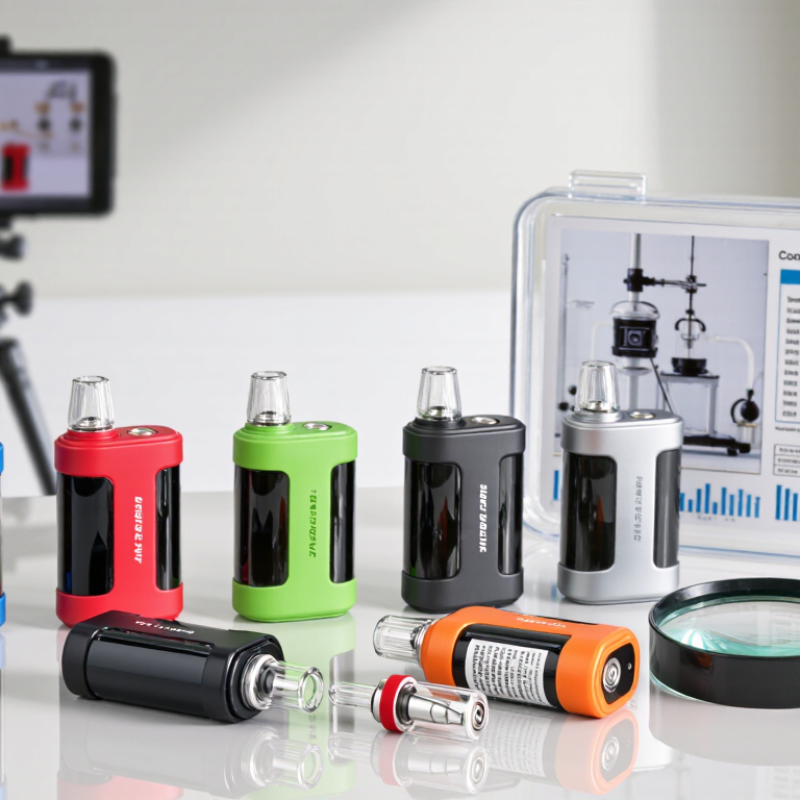
China’s disposable vape supplier landscape is broad, export-focused, and uneven in quality. Shenzhen and nearby manufacturing clusters support design, assembly, testing, and packaging services. However, a trading company may present itself as a factory. That distinction matters.
The Global State of Tobacco Harm Reduction 2024 estimates about 114 million people worldwide vape. This demand attracts serious manufacturers and unreliable intermediaries. I have learned that a polished catalog proves almost nothing. A credible supplier should provide a verifiable business license, factory address, quality certificates, and recent production records. Ask whether the certificate matches the legal entity. Check the issuing organization independently.
Paperwork can still mislead. Request sealed samples from the proposed production line, not showroom units. Independent laboratory testing should confirm declared ingredients, nicotine concentration where legally permitted, battery safety, and contaminant limits. Match the report’s batch number with the sample box. Small details matter. A missing batch code is a warning.
Industry quality guidance, including ISO 9001 principles, emphasizes traceability and documented corrective action. Suppliers should explain how they handle defective units, battery incidents, and product recalls. China Customs trade data also shows the scale of the country’s export manufacturing base, but export volume does not prove supplier reliability. My earlier mistake was trusting fast replies and low prices. A slower supplier with transparent records may be safer. Yet even a complete audit is only a snapshot, so repeat inspections and periodic testing remain necessary.
| Evaluation Dimension | Typical Market Reference | Evidence to Request | Warning Signs |
|---|---|---|---|
| Business registration | A legitimate supplier should have a verifiable mainland China business registration and a business scope relevant to electronic products or vaping devices. | Current business licence, unified social credit code, registered address, legal representative, and official government database record. | Only a personal bank account, inconsistent company names, recently altered documents, or an address that cannot be verified. |
| Factory capability | Established manufacturers generally disclose production locations, assembly processes, quality-control procedures, and estimated monthly capacity. | Live video audit, factory photographs with date markers, production-flow explanation, equipment list, and independent inspection report. | A trading intermediary presents itself as a factory, refuses a video audit, or gives capacity figures without supporting records. |
| Product compliance | Requirements depend on the destination market. Common technical documentation may include RoHS, REACH-related declarations, battery safety test reports, and transport documentation. | Test reports showing model numbers, laboratory details, report dates, scope, and matching technical specifications. | Generic certificates, altered PDFs, missing model numbers, expired reports, or documents issued for a different product. |
| Battery documentation | Lithium-battery products commonly require identification of cell type, nominal capacity, protection design, safety testing, and transport compliance. | Battery specification sheet, SDS, UN 38.3 test summary, cell traceability records, and protection-circuit information where applicable. | Capacity claims that are physically unrealistic, no cell information, damaged packaging, or refusal to provide transport documents. |
| Quality-management system | ISO 9001 certification can indicate a documented quality system, but it does not by itself prove that every disposable vape product is safe or compliant. | Certificate number, certification body, scope, validity period, audit status, incoming inspection records, and final inspection standards. | A certificate unrelated to the factory, unclear certification body, or use of one certificate to cover unrelated facilities. |
| Sample consistency | Samples should match the mass-production specification in dimensions, materials, battery capacity, liquid volume, airflow, packaging, and labeling. | Signed golden sample, approved specification sheet, pre-shipment inspection checklist, and random batch testing. | The supplier changes components without approval, sends samples from another source, or avoids written specifications. |
| Traceability | Reliable production uses batch codes or equivalent records for components, assembly dates, inspection results, and shipment quantities. | Batch-number format, component lot records, production dates, defect reports, and recall or complaint procedures. | No batch identification, handwritten labels only, or inability to identify the source of a defective shipment. |
| Minimum order quantity | Stock products may support lower trial quantities, while customized hardware, packaging, and formulas normally require higher minimums. Exact quantities vary by specification. | Written quotation separating stock, private-label, packaging, tooling, and formulation quantities. | Unusually low pricing with no cost breakdown, hidden tooling charges, or a large deposit demanded before sampling. |
| Lead time | Sample preparation is commonly shorter than customized mass production; timing depends on components, artwork approval, testing, and destination-market requirements. | Detailed production schedule, material availability, approval milestones, inspection date, and shipping plan. | Guaranteed delivery dates without checking component availability or repeated unexplained schedule changes. |
| Packaging and labeling | Labels should comply with the destination market’s rules for ingredients, nicotine information where applicable, warnings, importer details, batch identification, and disposal symbols. | Destination-specific artwork review, packaging material declaration, label checklist, and proof of regulatory review. | Copied artwork, missing warnings, unsupported health claims, inaccurate nicotine information, or labels intended for another market. |
| Payment and contracting | Commercially safer transactions use a contract that specifies product requirements, inspection rights, defect remedies, ownership of artwork, and payment milestones. | Company-to-company contract, proforma invoice, beneficiary verification, quality agreement, and dispute-resolution terms. | Payment to an unrelated personal account, pressure for full prepayment, cryptocurrency-only requests, or refusal to sign specifications. |
| Independent inspection | Pre-shipment inspection can verify quantity, appearance, packaging, labeling, basic functionality, and selected safety or performance criteria. | Inspection checklist, sampling plan, photographs, defect classification, test results, and signed inspection report. | Supplier blocks third-party inspection, changes the inspection date without explanation, or ships before approval. |
| Regulatory responsibility | The importer or seller may carry legal responsibility in the destination market even when the product is manufactured in China. | Written allocation of responsibilities for product registration, taxes, customs, labeling, market surveillance, complaints, and recalls. | The supplier claims that one overseas certificate automatically authorizes sales in every country. |
Note: The reference points above describe common supplier-evaluation practices and documentation requirements. Exact compliance obligations, nicotine limits, packaging rules, product registrations, and import restrictions must be confirmed for the destination market before purchase.
Verify the business license, factory address, quality certificates, and recent production records. The legal entity must match every document. A polished catalog proves very little.
Request the actual production address and written details about manufacturing locations. Ask who assembles, tests, and packages the products. Require disclosure of all subcontractors.
Certificates can be copied, outdated, or linked to another company. Compare the entity name, address, product type, and validity dates. Contact the issuing organization independently. Email links are not enough.
Request sealed samples from the proposed production batch. Do not rely only on showroom units. Compare packaging, lot numbers, seals, weight, airflow, and printed details. Small differences can reveal weak quality control.
Check that the report identifies the same batch number as the sample box. Review testing for battery safety, materials, emissions, and restricted substances. Use an accredited laboratory. A missing batch code is a warning.
Inspect incoming materials, assembly lines, storage areas, and testing records. Review controls for subcontracted production. Ask how defective units, battery incidents, and recalls are handled. Records matter more than confident promises.
No. It mainly shows a documented quality-management system. It does not independently prove product safety. Additional laboratory testing remains necessary. One certificate is weak evidence.
An audit shows conditions at one specific time. Suppliers, materials, and production sites can change quickly. Repeat inspections help detect new risks. Even careful checks can miss unauthorized subcontracting.
Trusting low prices, fast replies, attractive packaging, or one successful sample can mislead buyers. I have trusted speed before. That was a mistake. A slower supplier with transparent records may be safer.
China’s disposable vape supplier market includes many capable manufacturers, but buyers should verify each company carefully before placing an order. Check business registration, factory information, quality-management procedures, production capabilities, and compliance with applicable regulations. Request product specifications, testing reports, traceability records, and samples, then compare the samples with the supplier’s documents and stated specifications. These steps can help confirm whether the products are genuine, consistent, and properly manufactured.
What are the signs of a fake disposable vape supplier? Common warning signs include unverifiable credentials, incomplete documentation, pressure to pay quickly, unusually low prices, inconsistent packaging, missing safety information, and reluctance to provide samples or factory evidence. Buyers should also compare packaging quality, product performance, communication, warranty terms, replacement policies, and after-sales support. A reliable supplier should offer clear information, consistent quality, transparent pricing, and responsive service rather than making unsupported claims.

 AceOne Vape