The global vaping ecosystem is shifting rapidly from fragmented regional markets to a highly standardized, pharmaceutical-grade industrial framework. At the heart of this transition is the formulation of Propylene Glycol (PG) and Vegetable Glycerin (VG) base matrices. As the essential carriers for nicotine, flavorings, and throat-hit elements, PG and VG characteristics dictate everything from hardware lifecycle optimization to the end-user sensory experience.
For volume distributors, brand owners, and global procurement managers, sourcing bulk e-liquid is no longer merely a commercial negotiation—it is an exercise in complex regulatory alignment, toxicology verification, and supply chain logistics. To remain competitive in markets governed by the EU Tobacco Products Directive (TPD) and the US FDA Premarket Tobacco Product Application (PMTA) mandates, choosing the right manufacturer in Shenzhen, China (the epicenter of global vape engineering) is critical.
Every finished e-liquid relies on a delicate ratio of Propylene Glycol and Vegetable Glycerin. A deep understanding of their physical properties is crucial for matching liquid viscosity to the engineering specifications of various vaporization chambers, coil structures, and wick styles.
| Property / Characteristic | Propylene Glycol (PG) | Vegetable Glycerin (VG) | B2B Sourcing Target Specification |
|---|---|---|---|
| Dynamic Viscosity (at 20°C) | ~60 mPa·s (Low) | ~1412 mPa·s (Extremely High) | Pre-blended to fit hardware wicking speeds |
| Boiling Point | 188.2°C | 290°C | Optimized to prevent dry-burn or coil caramelization |
| Sensory Profile | Strong throat hit, neutral sweetness | Mild throat hit, naturally sweet taste | USP Grade purity >99.7% minimum |
| Primary Function | Flavor carrier, thinning agent | Vapor volume creation, thickening agent | Sourced from verified non-GMO palm or soy bases |
To ensure stability, top manufacturers utilize USP (United States Pharmacopeia) and EP (European Pharmacopoeia) grade base ingredients. When formulating for low-power Pod Systems, a 50PG / 50VG blend is standard to prevent dry hits on ceramic or cotton micro-coils. For high-wattage sub-ohm cloud production, a 30PG / 70VG or 20PG / 80VG ratio is required to avoid leakage through airflows while providing thick vapor volume.
Global supply chain managers must vet potential e-liquid partners against a rigorous scorecard. Lower tier exporters often bypass compliance to reduce costs, exposing buyers to customs seizures, product recalls, and brand liability.
Production should occur inside Class 100,000 (ISO 8) or Class 10,000 (ISO 7) certified cleanrooms, mitigating microscopic particulate contamination during filling.
Suppliers must supply Gas Chromatography-Mass Spectrometry (GC-MS) analysis confirming zero Diacetyl, Acetyl Propionyl, or heavy metal contamination.
Exporters must demonstrate advanced sensory development pipelines capable of creating customized nicotine salt matrices with low degradation rates.
Established in 2013, Shenzhen AceOne Vape Co., Ltd. is a premier high-tech enterprise specializing in the R&D, manufacturing, and global sales of electronic atomizers and vaping products. With a strategic focus on the European Union market, AceOne Vape is committed to providing fully compliant, high-quality vaping solutions that meet and exceed global standards.
Our innovative approach, combined with advanced manufacturing techniques, has made AceOne Vape a trusted partner in the e-cigarette industry, particularly in the highly regulated European market. We operate a state-of-the-art 15,000 sq.m. manufacturing facility staffed by over 800 employees. This includes a dedicated team of 20-30 top R&D engineers focused on compliance-driven design and innovation, alongside over 50 quality control personnel ensuring superior flavor delivery, leak resistance, and consistent batch performance.
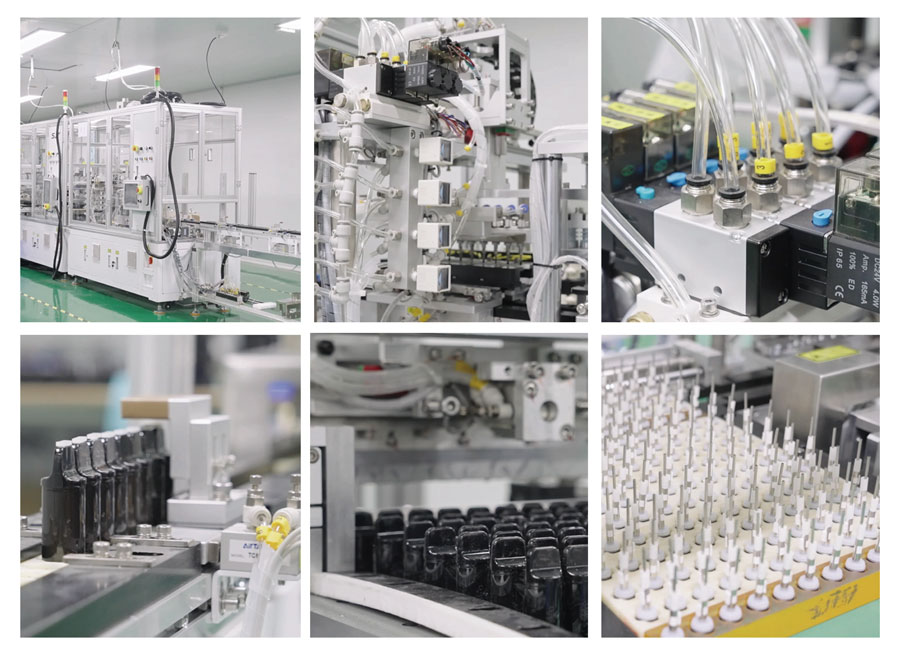
Manufacturing excellence is a core pillar of AceOne Vape. Our facility utilizes advanced automation to guarantee consistency across large orders.
To ensure high precision, efficiency, and scalability, we operate four fully automated pod production lines. This automation minimizes human error and guarantees consistent product quality at scale. Robotic assembly systems enable us to meet high-volume orders with short lead times.
We offer a comprehensive range of TPD-compliant products, including popular 2ml pod systems. Every batch is formulated to meet the strict limits of European markets (including nicotine strengths ≤ 20mg/ml, leakproof refill designs, and comprehensive emissions testing).
Beyond standard TPD requirements, all manufacturing materials and final formulas are verified by international testing bodies, boasting full CE, RoHS, and REACH certifications to support consumer health and safety.
For importers distributing PG/VG e-liquids across multiple continents, understanding localized regulations is the difference between brand expansion and legal liability. Each region implements distinct requirements:
| Regulatory Framework | Jurisdiction | Key E-Liquid Compliance Mandates | AceOne Factory Verification Status |
|---|---|---|---|
| EU TPD (Article 20) | European Union Member States | Max 2ml reservoir, 10ml refill bottles, 20mg/ml max nicotine strength, 6-month prior notification. | Fully Verified & Registered across EU Portals |
| US FDA PMTA | United States | In-depth ingredient listing, toxicological hazard studies, environmental assessment reports. | Data files ready for submission / OEM collaboration support |
| UK MHRA | United Kingdom | Submission via MHRA Portal, verified emission profiles, strict labeling compliance. | Notified & Approved for active distribution |
| GCC Standardization Org (GSO) | Middle East Markets | Purity thresholds, zero colorants, child-resistant packaging specifications. | MSDS & Lab Certifications compliant |
Through proactive investment in compliance testing, AceOne Vape ensures all e-liquids are manufactured using raw materials free from unauthorized compounds (such as diacetyl, 2,3-pentanedione, and acetoin), protecting brand owners from regulatory risks.
Shenzhen, China, manufactures over 90% of the world's vaping hardware and e-liquids. Sourcing directly from an established Shenzhen provider like AceOne Vape offers major logistics and production advantages:
We test formulations directly on target ceramic and cotton heating elements inside the factory. This hardware-juice pairing reduces the risk of leakage and dry hits in final products.
We source raw ingredients directly from major chemical providers, guaranteeing competitive volume pricing for medical-grade PG, VG, and high-purity flavorings.
Our proximity to the Port of Shenzhen enables fast sea, air, and rail transport to global hubs, minimizing shipping transit times for high-volume orders.
At Shenzhen AceOne Vape Co., Ltd., we offer expert ODM and OEM services, leveraging our deep R&D expertise and advanced production capabilities. We collaborate with global brands to create customized, market-ready pod systems and other vaping devices that align perfectly with your specifications and the demanding regulatory frameworks of the European Union.
Our strong capabilities in both ODM and OEM product development allow us to help our partners bring innovative, compliant products to market efficiently and effectively. From concept to final product, we guide you through every step of the process, ensuring optimal design and production solutions that exceed industry expectations.
As the debate surrounding e-cigarettes continues to evolve, AceOne Vape is committed to pushing the boundaries of technology and sustainability within the vaping industry. While e-cigarettes have made a positive impact as an alternative to smoking, challenges related to customer experience and waste reduction still exist.
In 2023, we significantly increased our R&D investments to address these challenges and pave the way for sustainable growth. Our focus on research and innovation enables us to deliver not only high-quality products but also environmentally responsible solutions that minimize vaping waste and support long-term industry progress. Guided by our vision of perfection, uncompromising quality, and environmental stewardship, we collaborate with global partners to explore new technologies and drive ongoing development in the vaping sector.
E-liquid viscosity and flavor concentrations must be tailored to regional weather conditions and consumer preferences. Our engineers customize formulas for specific market scenarios:
Scenario: Low average ambient temperatures can cause Vegetable Glycerin to coarsen, slowing down wicking speed.
Solution: We adjust ratios to a 55PG/45VG blend with low-viscosity bases to prevent dry hits in cold climates.
Scenario: High temperatures reduce e-liquid viscosity, which can cause pod leakage.
Solution: We formulate with a 65% to 70% VG base combined with high-grade wicking cotton to prevent leakage in hot weather.
Scenario: Strong consumer preference for high-cooling mints and sweeter fruit flavor profiles.
Solution: We use specialized cooling agents that remain stable at high vaporization temperatures without breaking down.
To assist global purchasing departments, our technical engineers answer common questions regarding e-liquid chemistry, hardware matching, and international compliance.
 AceOne Vape